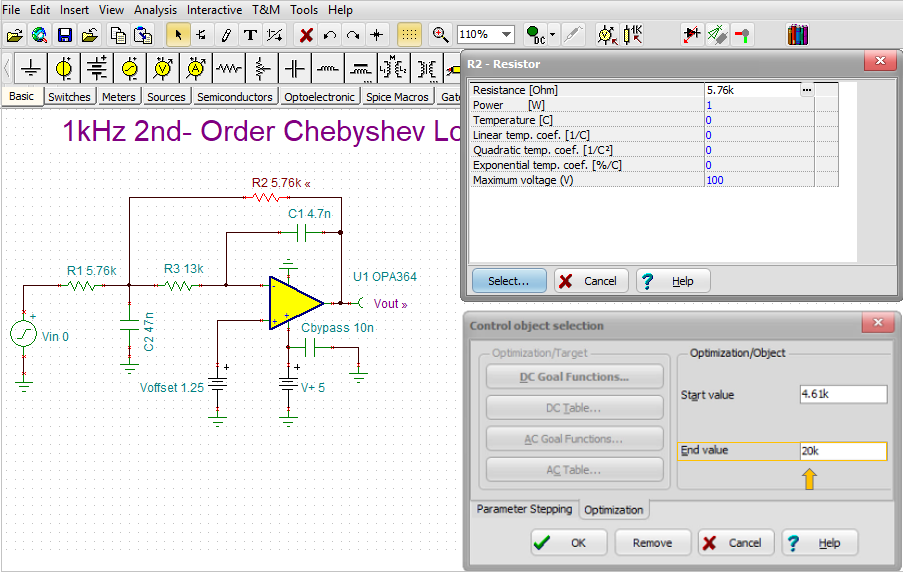
Amp Circuits Configurations and Schematics Circuit Diagram One of the most famous of these was the LM741 op-amp. You still see many circuits using this op-amp. Fortunately, manufacturers kept the pin layouts the same for the ever-increasing and improving range of op-amps. Because the external feedback components largely determine the behavior of op-amp circuits, you can generally substitute other op-amps. Lecture 8: Op-Amps; About this Video. Circuit design is complicated by interactions among elements, but these interactions can be reduced or eliminated by using an op-amp as a buffer. This lecture covers how to analyze and design op-amp circuits. Lecture handout (PDF) Lecture slides (PDF) Recitation Video

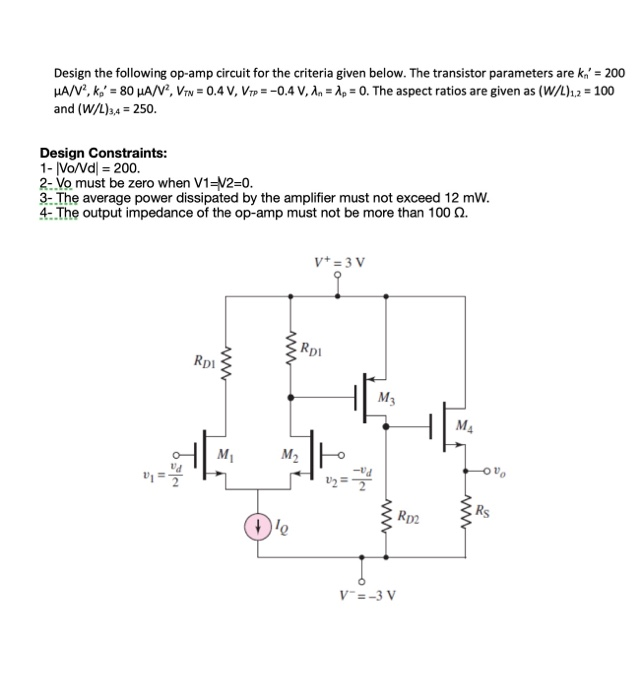
DESIGN EXAMPLE OF A TWO-STAGE OP AMP Example 23-1 - Design of a Two-Stage Op Amp If K N'=120µA/V2, K P'= 25µA/V2, V TN = |V TP | = 0.5±0.15V, N = 0.06V-1, and P = 0.08V-1, design a two-stage, CMOS op amp that meets the following specifications. , =. =) = /) 3 (/) =--+ (/) =
PDF Operational Amplifiers: Basics and Design Aspects Circuit Diagram
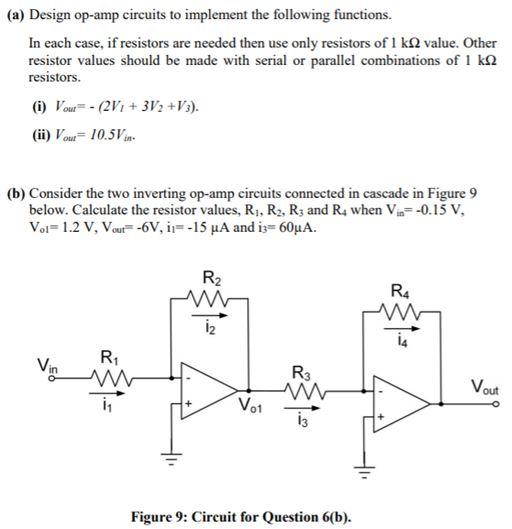
Operational Amplifier Circuits as Computational Devices So far we have explored the use of op amps to multiply a signal by a constant. For the inverting amplifier the multiplication constant is the gain R2 − R1 and for the non inverting amplifier the multiplication constant is the gain R2 1+ R1. Op amps may also perform other Operational amplifiers (op-amps) are some of the most important, widely used, and versatile circuits in use today. The first op-amp used vacuum tubes and was released in 1941 by Bell Labs. The ubiquitous ua741 was released in 1968 and is considered by many to be the standard upon which others are based. It is still in production today from
An op-amp has two inputs, an inverting terminal (labeled „-") and a non-inverting terminal (labeled „+"). And has a single output. The first input is called inverting because the output voltage is inverse of the voltage applied at the inverting input, times the gain of the amplifier circuit.If we apply the signal to the non-inverting input we get the same signal on the output, times gain.
Operational Amplifier Basics with 6 Circuit Examples Circuit Diagram
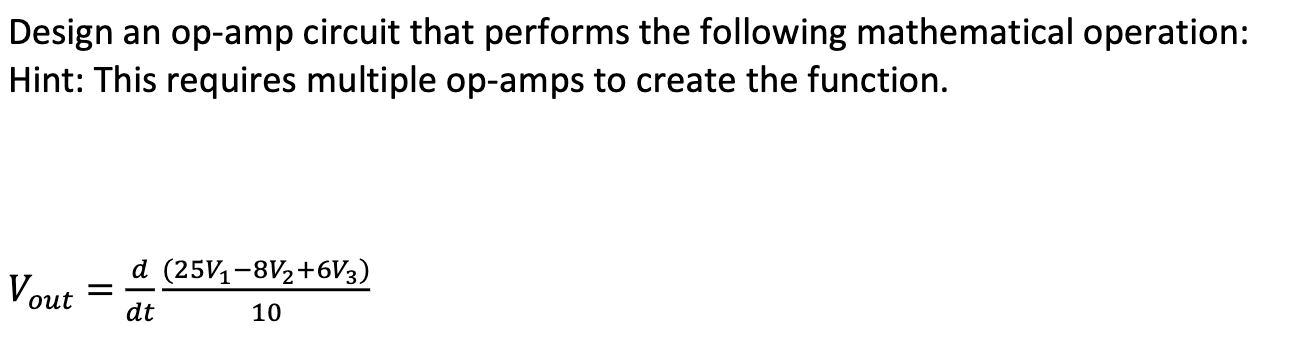
Operational amplifiers (op amp) are linear devices that have all the properties required for nearly ideal DC amplification and are therefore used extensively in signal conditioning or filtering or to perform mathematical operations such as adding, subtracting, integration, and differentiation. The purpose of this article is to present 10 basics circuits for newcomers to electronics designs and